Electrical Safety and Maintenance Tips Guide
Learn electrical safety and maintenance tips to reduce shock and fire risks in homes and workplaces.
3/10/20263 min read
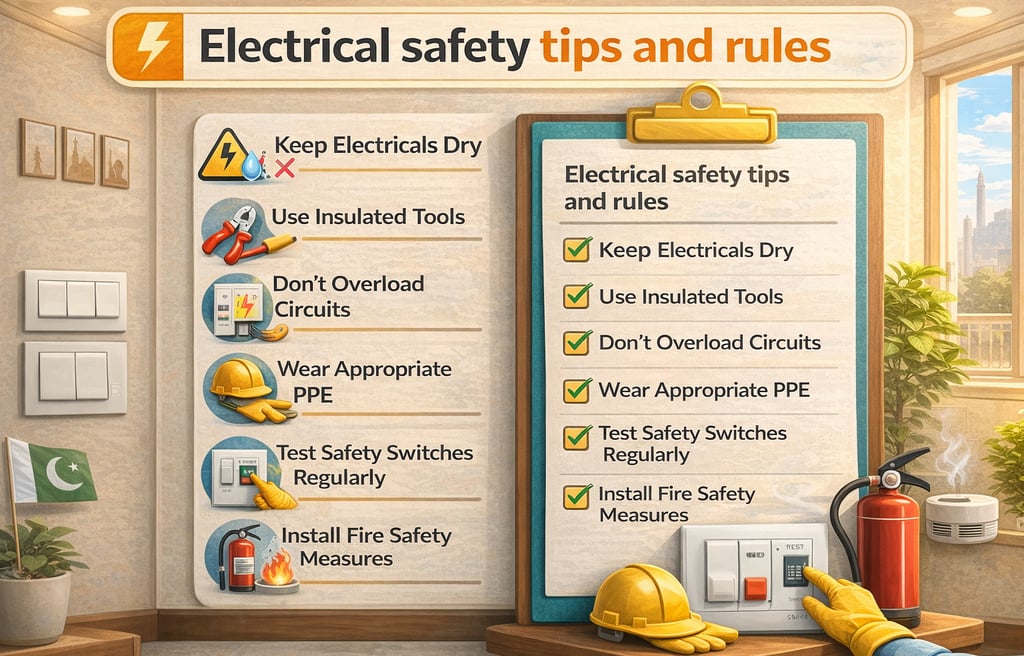
Introduction
Electrical hazards produce profound risks in homes and workplaces when safety rules are not taken seriously. Faulty wiring, moisture exposure, and deface equipment enhance accident chances. Many incidents took place due to poor awareness and insecure handling practices.
Applying electrical safety and maintenance tips assist to reduce electrical shock and fire risks. Routine inspections and safe equipment helps safer environments. Following proper procedures stops avoidable electrical accidents. Regular checking and timely maintenance of the circuit breaker assist to prevent overloads, short circuits, and unexpected power failures in residential and commercial electrical systems.
Understanding electrical risks permits people to respond before problems become severe. Simple preventive steps safeguard devices, property, and human life. Regular maintenance ensures long-term electrical system reliability.
Electricity needs careful handling to control injuries and equipment damage. Following basic safety practices decrease daily electrical risks. Awareness promotes protection across homes and workplaces.
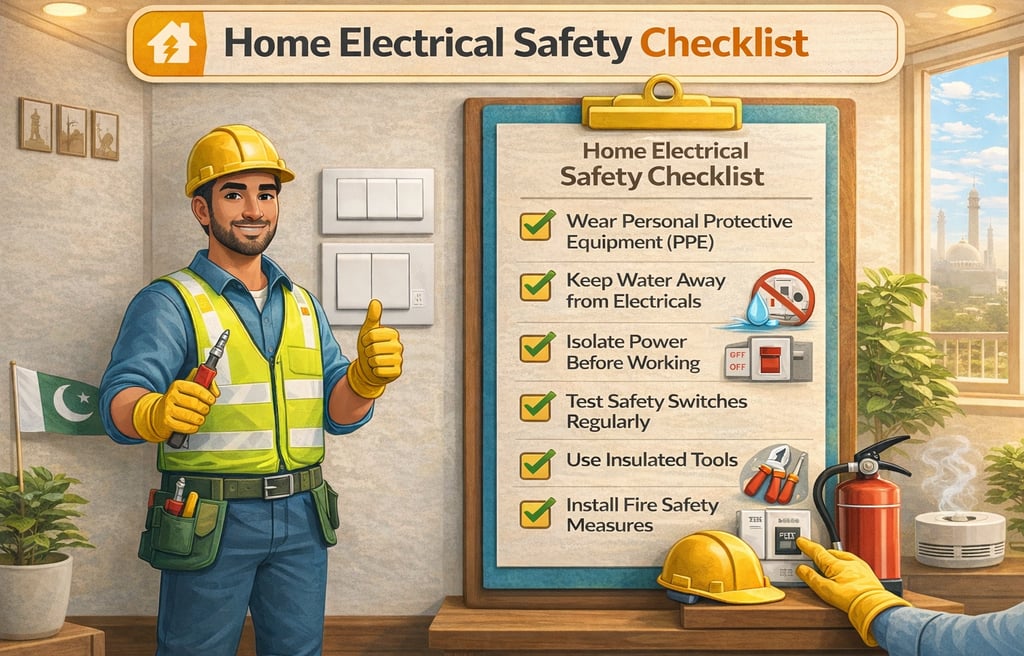
Turn off the power source
Switching off the power saves accidental contact with live wires.
Always cut off circuits before performing electrical work.
This step reduces shock and fire risks.
Avoid water at all times
Water raises electrical conductivity and danger.
Wet hands increase shock risk during appliance handling.
Dry environments boost electrical safety conditions.
Use insulated tools
a. Insulated tools save users from live current exposure.
b. They decrease risk during repairs and inspections.
c. Proper tools assist safer electrical maintenance.
Wear protective equipment
i. Protective gloves shield hands from current flow.
ii. Safety footwear lowers grounding risk.
iii. Personal protection reduces injury severity.
Check for damaged wires
Frayed cables are source sparks and overheating.
Damaged insulation lay bare internal conductors.
Regular checks avert fire hazards.
Avoid overloading circuits
Excess load overheats wiring systems.
Overloaded sockets enhance fire probability.
Balanced loads promote circuit stability.
Follow lockout tagout procedures
Lockout systems stop unintended power restoration.
Tagging alerts others about ongoing repairs.
This stops accidental energizing.
Inspect equipment regularly
Frequent inspections identify faults early.
Maintenance increases device performance and safety.
Scheduled checks put a stop to sudden failures.
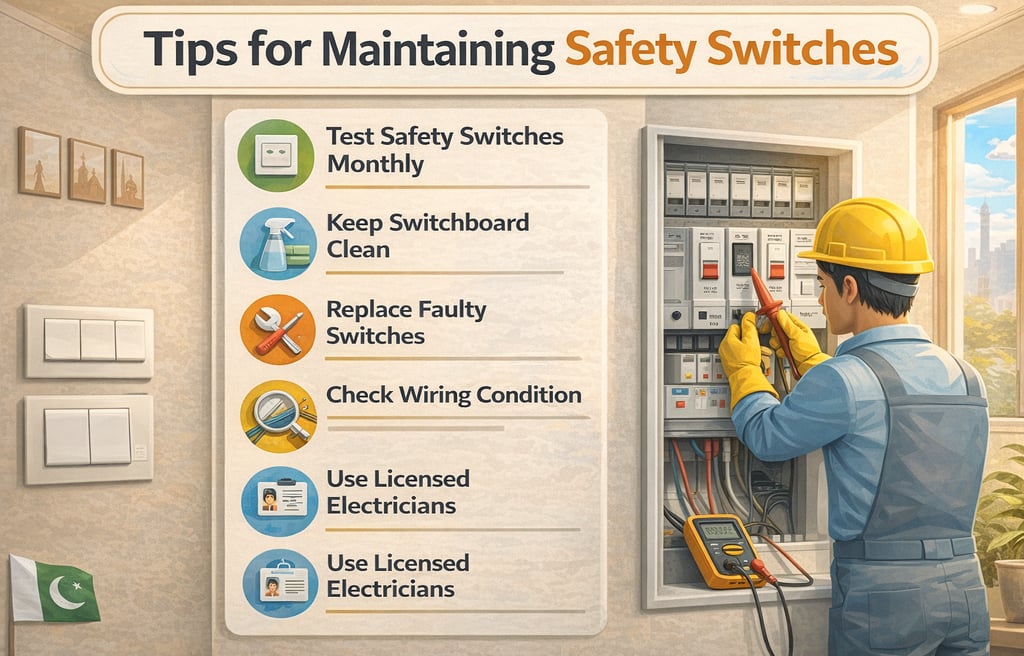
Tips for maintaining safety switches
Safety switches cut off power during faults.
They save users from electric shocks.
Test safety switches monthly
a. Monthly testing ensures operational efficiency.
b. Faults appear through testing.
c. Early detection prevents system breakdown.
Keep switchboard clean
Dust interferes with switch performance.
Clean panels upgrade electrical reliability.
Clear space helps inspection access.
Replace faulty switches
i. Defective switches crash during emergencies.
ii. Replacement restores system protection.
iii. New components enhance reliability.
Check wiring condition
Loose wiring disrupts safety switch response.
Firm connections help quick disconnection.
Regular checks improve system safety.
Use licensed electricians
Qualified electricians secure proper installations.
They keep in mind electrical safety standards.
Professional handling stop errors.
Safety Precautions for Electrical Installations
Using certified electrical accessories assist to decrease the risk of short circuits, overheating, and electrical fires in homes and workplaces.
Conclusion
Electrical safety relies on regular inspections and safe handling practices.
Maintenance lessens risks related to shocks and fire hazards.
Contact experienced and trained electrical professionals or certified service providers for inspections.
FAQs
What are electrical safety and maintenance tips?
They include rules that stop electrical shock and system failures.Why is regular electrical maintenance important?
Maintenance detects faults early and reduces fire risks.How often should safety switches be tested?
They should be tested at least once every month.What causes most electrical accidents?
Damaged wiring, water contact, and overloaded circuits create accidents.Who should perform electrical inspections?
Only licensed electricians should handle inspections and repairs.