Electrical Safety Checklist for New Homes Pakistan
Complete electrical safety checklist for new homes in Pakistan. Ensure safe wiring, panels, and accessories.
4/13/20264 min read
Electrical Accessories Safety Checklist for New Homes in Pakistan
Introduction
Building a new home often brings hidden risks related to wiring, appliances, and improper installations. Many homeowners overlook essential checks, which can lead to electrical hazards, costly damages, or serious safety concerns later. Without proper planning, even small mistakes in electrical accessories can create long-term risks.
A structured checklist helps ensure every component meets safety standards and performs efficiently under daily usage. From inspecting panels to verifying grounding systems, each step plays a crucial role in preventing failures. Using the electrical safety checklist for new homes ensures a secure environment and reduces unexpected electrical issues significantly.
Understanding safety practices also helps homeowners make better decisions when choosing switches, sockets, and protection devices. Reliable installations, certified equipment, and proper maintenance improve both safety and performance. This approach not only protects property but also ensures long-term electrical reliability for modern homes.
Electrical safety awareness
Electrical safety starts with understanding risks in modern homes. Poor installations often lead to serious hazards.
Homeowners must ensure all accessories meet safety standards and local regulations. This reduces long-term risks. Ensuring electrical accessories safety is essential to prevent hazards, protect appliances, and maintain a secure home environment.
Electrical inspection importance
A detailed inspection ensures the system works safely and efficiently. It also prevents unexpected failures.
Professionals check wiring, panels, and load distribution during inspections. This improves overall system reliability.
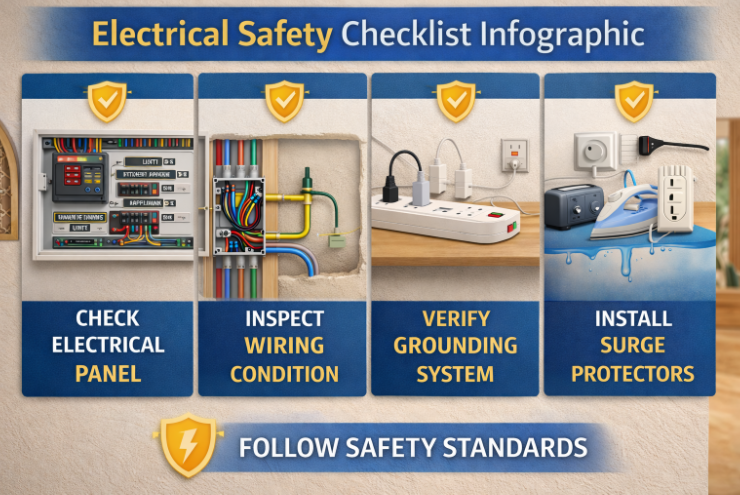
Check electrical panel
The electrical panel controls the entire power system. It must be properly installed and labeled.
Ensure breakers are not overloaded
Check for proper circuit labeling
Confirm secure connections
Inspect wiring condition
Wiring forms the backbone of any electrical system. Damaged wires increase fire risks significantly.
Always use high-quality insulation and avoid exposed wiring. Proper routing ensures long-term durability.
Test outlets and switches
Switches and sockets must function smoothly without sparks or delays. Faulty units indicate internal issues.
Test for loose connections
Ensure proper voltage flow
Replace damaged units immediately
Verify grounding system
Grounding protects users from electric shocks. It is essential for every modern home.
A proper earthing system safely directs excess current into the ground. This prevents damage to appliances.
Meter installation safety
The electricity meter must be installed securely and correctly. Improper placement can cause safety issues.
Ensure it is protected from weather and unauthorized access. This maintains accurate readings and safety.
Load management
Managing electrical load prevents circuit overload and equipment damage. Balanced distribution improves efficiency.
Avoid connecting too many devices
Use separate circuits for heavy appliances
Monitor energy consumption
Earthing system
Earthing plays a critical role in electrical safety. It reduces risks of shocks and short circuits.
Proper installation ensures current flows safely during faults. This protects both users and appliances.
Avoid overloading circuits
Overloaded circuits are a major cause of electrical fires. They increase heat and damage wiring.
Always distribute load evenly across circuits. Avoid using multiple high-power devices together.
Use of certified equipment
Certified electrical accessories ensure safety and durability. Non-certified products often fail quickly.
Choose approved switches and sockets
Verify quality standards
Avoid cheap alternatives
Inspect cords and plugs
Cords and plugs often wear out over time. Damaged ones can cause sparks or shocks.
Replace worn-out cords immediately. Ensure plugs fit securely into outlets.
Install surge protectors
Surge protectors safeguard appliances from voltage spikes. They are essential in areas with unstable power.
They prevent sudden damage and extend equipment lifespan.
Check circuit breakers
Circuit breakers act as the first line of defense. They cut power during overloads or faults.
Ensure they function correctly and trip when needed. Faulty breakers must be replaced quickly. Proper circuit breaker safety is essential to prevent electrical overloads, reduce fire risks, and protect both appliances and occupants from serious hazards.
Avoid water near electricity
Water increases the risk of electric shock significantly. It must be kept away from electrical points.
Install sockets at safe heights and avoid wet environments.
Replace damaged cords
Damaged cords expose wires and create hazards. Immediate replacement prevents accidents.
Never repair cords temporarily. Always use new, high-quality replacements.
Install GFCI outlets
GFCI outlets protect against electric shocks. They shut off power instantly when faults occur.
These are ideal for kitchens, bathrooms, and outdoor areas.
Child safety precautions
Children are vulnerable to electrical hazards. Safety measures must be implemented early.
Use socket covers
Keep wires out of reach
Install child-proof switches
Safe use of electrical appliances
Proper appliance usage reduces risks and improves efficiency. Always follow manufacturer instructions.
Avoid using damaged appliances and unplug devices when not in use.
Conclusion
A well-planned checklist ensures electrical safety and long-term reliability in new homes. Regular inspections and proper accessories reduce risks significantly. Homeowners should consult professionals for safe installations and maintenance.
For high-quality solutions, explore reliable electrical accessories options at https://www.bushpak.com/ to ensure safety and durability.
FAQs
What is included in an electrical safety checklist for new homes?
It includes panel inspection, wiring checks, grounding, outlets, and safety devices verification.Why is grounding important in home electrical systems?
Grounding prevents electric shocks and protects appliances from damage during faults.How often should electrical systems be inspected?
Experts recommend inspections during installation and periodic checks every few years.What are the common electrical hazards in new homes?
Faulty wiring, overloaded circuits, and poor-quality accessories are common risks.
Are surge protectors necessary for homes in Pakistan?
Yes, they protect appliances from voltage fluctuations and power surges.