Different Types of Electrical Switches: A Complete Guide for Modern Homes and Buildings
Electrical switches play an important role in controlling lighting, appliances, and electrical circuits in housing and commercial circumstances.
3/9/20265 min read
Different Types of Electrical Switches: A Complete Guide for Modern Homes and Buildings
Electrical switches play an important role in controlling lighting, appliances, and electrical circuits in housing and commercial circumstances. They recommend managing energy usage, improving safety, and provide convenient control of electrical systems. Understanding the various types of switches permit users to select the most admissible option based on application, load requirement, and environment.
Recent electrical systems based on the different types of switches to give not only operability but also durability, efficiency, and aesthetic appeal. From basic wall switches in homes to advanced industrial control switches, each type is designed to serve a specific purpose. This guide will provide the most common different types of switches used currently and shows how they vary in design, application, and utilization.
1. Operationwise Classification of Switches
Classification of switches
Switches are classified depending upon how they operate and control current flow.
ordinary operational types comprise of:
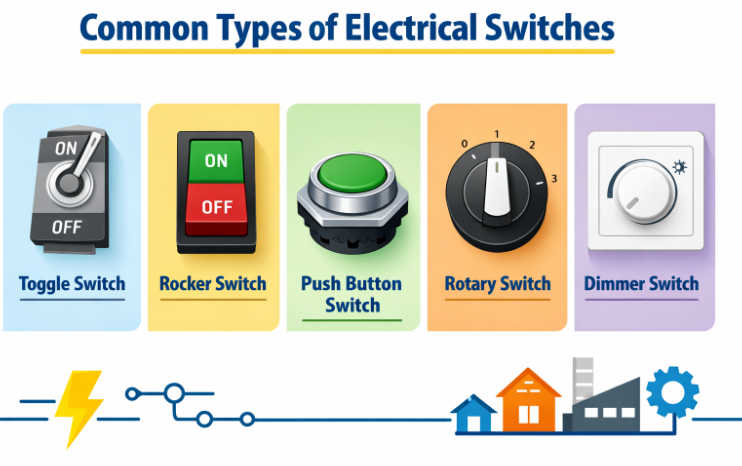
Toggle switches
Push-button switches
Rotary switches
Rocker switches
Slide switches
All the switches are in fact prepared for a very particular job. The typical toggle switches on walls are the heavy lifters for home lighting, while the rapid-press buttons on your doorbell or microwave handle simple, momentary jobs. If you at any time turned a dial to change a fan speed, you'd require a rotary switch, which is ideal for clicking through various different settings. For smaller appliances like kitchen equipment or power strips, producers usually go with rocker or slide switches because they fix easily into tight spaces. Beyond just looking different, these designs are designed to handle varying levels of power and how often they’ll be clicked over a lifetime, make sure your gadgets stay safe and functional.
2. Kinds of Switches Founded on Circuit Control
Switches may also be classified by how many circuits they control.
Key circuit-based switch types:
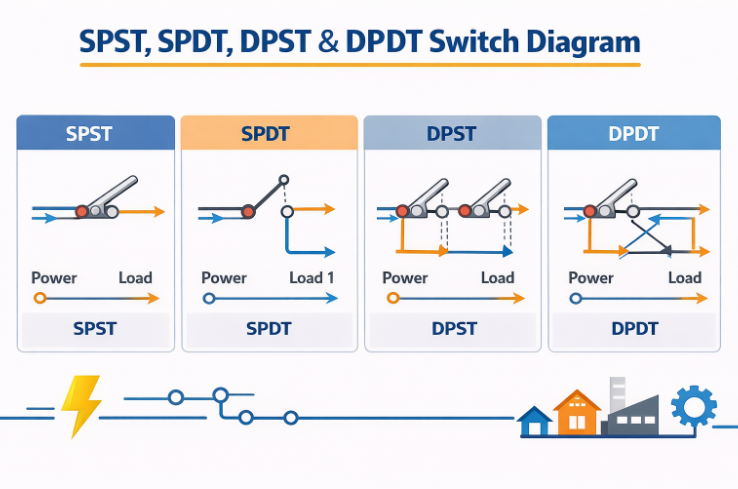
i. Single Pole Single Throw (SPST)
ii. Single Pole Double Throw (SPDT)
iii. Double Pole Single Throw (DPST)
iv. Double Pole Double Throw (DPDT)
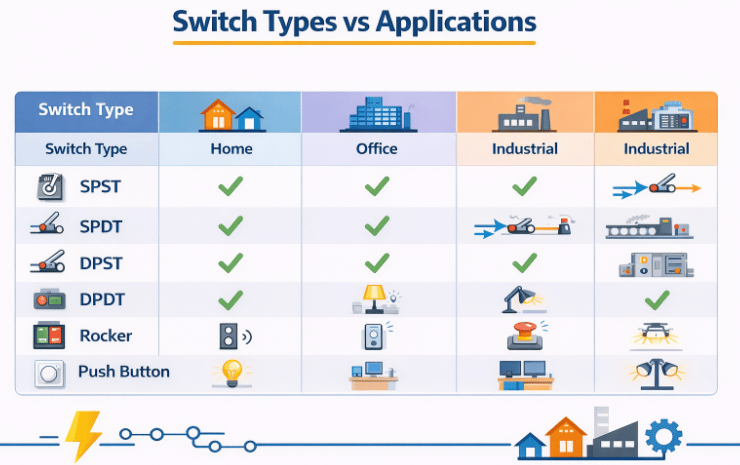
Single-pole, single-throw (SPST) switches are the basic tools in the box, used as a simple on-off gate for a single light or equipment. When one requires one to control one light from two different spots—like at the top and bottom of a staircase, he will require an SPDT switch to bridge the gap. For heavy jobs, double-pole (DPST) versions can kill power to two different circuits with one click, while the more multiplex DPDT style acts like a crossroads for controlling multiple paths of electricity immediately. You’ll find these setups everywhere, from the simple light switches in your corridor to the heavy-duty control panels accustomed to run industrial machinery.
3. Manual and Automatic Switches
Based on system conditions Switches may work manually or automatically .
Main categories are:
Manual switches
Limit switches
Pressure switches
Temperature switches
Proximity switches
Manual switches are the ones we physically turn over or press ourselves, like turning on a desk lamp or kitchen equipment. On the other hand, automatic switches do the heavy lifting by reacting on their own to things like movement, heat, or pressure changes. These hands-off versions are ideal for smart homes and big factories where it just isn’t practical to have someone standing by to turn over a switch all day. By ignoring the need for permanent human input, these systems run everything going smoothly and efficiently behind the scenes.
4. Installation Location Based Switches
Different environments require different switch designs.
Common installation-based switch kinds:
a. Wall-mounted switches
b. Panel-mounted switches
c. Waterproof switches
d. Industrial enclosure switches
Wall-mounted switches are the usual choice for most homes and offices, keeping things simple and within easy reach on your walls. For further technical setups, panel-mounted switches are inserted into electrical control boards to keep everything in order and protected. When managing rain or wet spots, waterproof switches are necessary to keep things safe and functional in the elements. Meanwhile, industrial switches are prepared like tanks, made to keep working through heavy dust, constant vibrations, and extreme heat without breaking a sweat.
5. Specialized Electrical Switches
Some switches are made for specific functions or advanced control.
Specialized switch kinds:
Dimmer switches
Smart switches
Timer switches
Key switches
Foot switches
Dimmer switches play a vital role in saving on your monthly power bill by lowering brightness. For modern equipment, smart switches let you turn on the lights from your phone or set up automated routines through your home network. You can also shift to timer switches to handle the heavy lifting of turning equipment on and off at specific times throughout the day. Finally, if security is a priority, key switches ensure that only the right people can access and operate your most important systems. It is stressed to get certified lighting control components from professional electrical companies or suppliers.
6. Applications of various kinds of Switches
Switches are used in nearly every electrical system.
Typical applications are:
Residential lighting and appliances
Commercial buildings and offices
Industrial machinery
Automation systems
Safety control panels
At home, we use switches every day to turn on the lights or get the ceiling fan spinning. In a factory setting, these same tools take on much bigger jobs, like keeping heavy machinery running or managing how power moves through the building. Offices and shops depend upon them to organize lighting zones and keep security systems active around the clock. By picking the right switch for the task, you’re not just making things convenient—you’re making sure the whole system stays safe and reliable in future. Industries rely on reliable electrical control devices to manage machinery and power systems
7. Way to Choose the Right Switch
Technical and environmental factors play an important role in choosing the correct switch.
Important selection prerequisites:
1. Voltage and current rating
2. Indoor or outdoor use
3.Manual or automatic control
4. Frequency of operation
5. Safety certification
Selecting the wrong switch for a job will put one in trouble, as it can instantly lead to overheating or even total equipment failure. Prior to starting any installation, it is essential to think about the environment, like whether the switch will face moisture, dust, or severe heat. One also requires to match the switch’s power rating to the specific tools or lights it will be controlling to keep everything running perfectly. By ensuring all these extra steps your setup will stay safe, reliable, and free from any nasty electrical surprises. Choosing suitable switching solutions depends on voltage rating, environment, and operational needs.
Conclusion
Aquenting with the different types of electrical switches support you to make the best choices for a safe and efficient setup. Whether you are doing work on a project for your home, office, or an industrial site, selecting the right switch is important to better control and reliability. It also helps you save energy costs by ensuring everything runs exactly when and how it should. Taking a moment to understand these options ensures your electrical system stays dependable and works perfectly for years to come.
For quality components and professional-grade solutions, it is generally recommended to contact companies or agencies that provide certified lighting control components and electrical accessories through trusted suppliers for project-based or commercial requirements.
FAQs
Q1: What are the main types of electrical switches?
The important kinds include toggle, push-button, rotary, dimmer, and smart switches used for different control needs.
Q2: Which switch is best for home use?
Toggle and rocker switches are most commonly used for household lighting and appliances.
Q3: What is the difference between SPST and SPDT switches?
SPST controls one circuit, while SPDT can switch between two circuits.
Q4: Are smart switches better than traditional switches?
Smart switches offer remote control and automation, but traditional switches are simpler and cost-effective.
Q5: How do I choose the right electrical switch?
Selection based on voltage rating, environment, and intended application.